
Why Your Living Room Still Feels Off — and What to Fix First (Before You Buy One More Thing)
Sometimes you’re 90% of the way there and the room still isn’t it. Before you add another pillow, lamp, or piece of wall art, let’s diagnose what’s really going on — because most of the time the fix isn’t more décor. It’s function, scale, layout, breathing room, and a little bit of you.
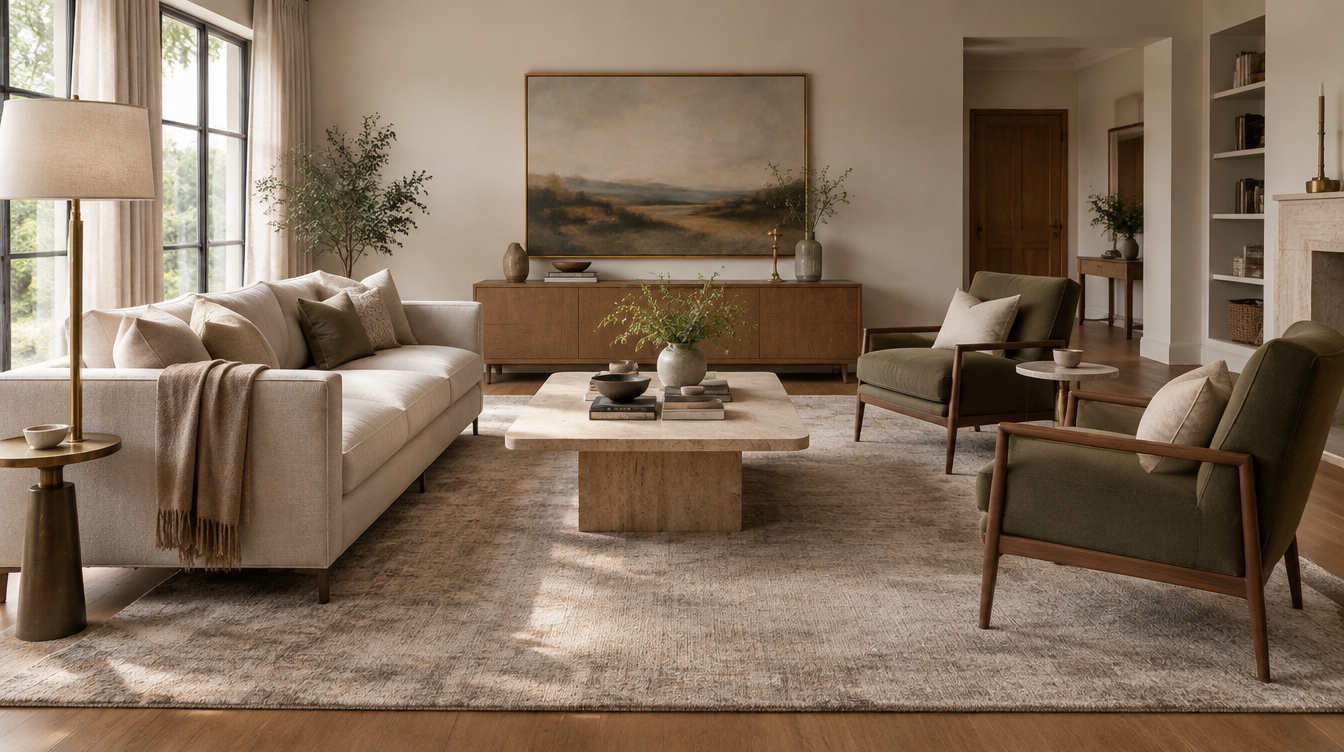
Have you ever finished styling a room, stepped back, and thought, it’s still not it? You did the things. You added the décor. And it still feels a little unsettled.
Here’s what I want you to know… that feeling usually doesn’t mean you’re far off. A lot of times you’re almost there and just need a couple of intentional tweaks, not a whole cart of new stuff.
And if we’re just meeting, welcome! I’m Tresha, your Interior Design Strategist and Coach, and my whole thing is helping you create a space that’s beautiful and feels just like you. So before you go shopping to fix that “off” feeling, let’s slow down and figure out what your room is actually asking for.
Start With How You Actually Live in the Room
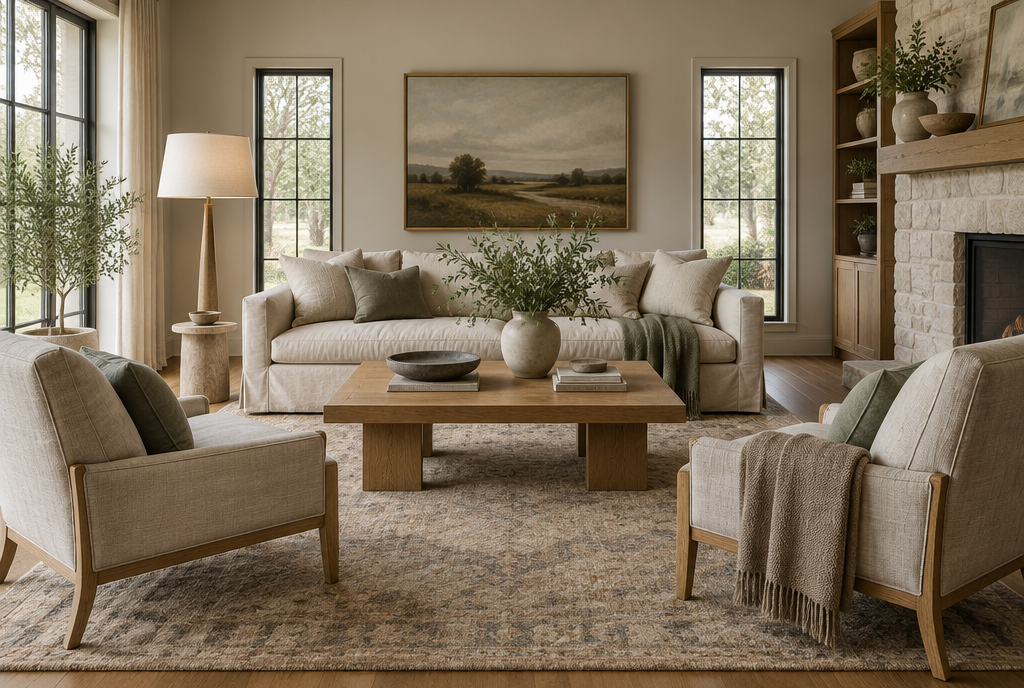
The prettiest room in the world won’t feel right if it doesn’t work for your real life. So the first question I always come back to is a simple one: how do you plan to use this space?
I know it sounds basic. But that one question quietly answers so much about what the room actually needs.
Sit with these:
What actually happens in this room most often?
Who needs to feel comfortable here?
Is your furniture set up for conversation, movie nights, reading, entertaining — or a mix of all of it?
What are you actually missing? Storage, seating, lighting, softness, a real focal point?
And what has to stay, no matter what?
In my own open-concept space, the thing I kept overlooking was storage. Once I named that, every other decision got easier because now I had a filter. When you know how the room needs to function, you stop buying pretty things that solve the wrong problem.
Check Scale and Proportion Before You Touch Style
This is one of the most common reasons a room feels off… The pieces just don’t relate to each other in size. And to be clear, this isn’t about everything matching. It’s about your furniture and décor feeling like they belong in the same room.
Think about it. A rug that’s too small makes your whole seating area feel like it’s floating apart. A dainty coffee table disappears next to a big sofa. And if you’ve got a sofa that’s 40 inches high and then bring in accent chairs that are 28 inches high, that’s going to look off, even if you can’t put your finger on why.
So here’s what I’d do. Measure the pieces that are staying, then choose add new pieces that complement and is in proportion with what you already have. Look at your room as one composition, not a pile of separate purchases.
A little reset I love to do is pull the smallest decorative items out of the room for a minute. With those items not in focus, it’s becomes so much easier to see whether your rug, seating, tables, lighting, and art actually have enough presence. Once you have made the adjustments, you can bring back only the pieces that make the room look stronger.
Watch Out for Competing Styles
Sometimes a room feels disconnected and it’s not the scale at all. It’s too many design styles are fighting each other. Now, mixing styles is absolutely allowed (I do it all the time), but there’s a strategy to it.
Take a slow look around. Is anything clashing? Do you have a lot of competing patterns going on, or colors that don’t really complement each other? A few minutes of honest looking here will tell you a lot.
Give Your Best Pieces Room to Breathe
Empty space is not the enemy. Every wall does not need something on it, and every surface does not need a little cluster of objects.
When there’s too many small things competing for attention, nothing gets to be the star. But if you have a piece you love, something you collected, or commissioned, or that means something to you…it deserves a moment. Give it a little breathing room and let your eye actually land on it. That space is what makes a home feel calm, intentional, and elevated.
So try editing before you add. Pull out what feels repetitive, undersized, or unrelated, then step back and notice where your eye naturally goes. The goal isn’t a bare room, it’s a room where the pieces that matter get to matter.
Rearrange Before You Buy
A lot of times, furniture ends up pushed against the wall. It feels safe, anchored like that. But a room can feel open and at the same time seem disconnected.
Look at how your furniture is arranged right now. Does it feel connected? In the living room, can everyone who walks in actually see the TV comfortably? Is the arrangement encouraging conversation? Is it set up for the things you actually want people to do in here? Can folks move through the room without cutting awkwardly through the seating area?
Here’s the good news: you may not need new furniture at all. It’s okay to float your sofa off the wall. It’s okay to angle a chair. Pulling a sofa in, shifting a table into a better relationship with the seating. That alone can change how the whole room feels. And in an open concept, that furniture grouping (plus your rug and lighting) is what quietly defines your living room zone.
Mix Old and New So It Feels Like You
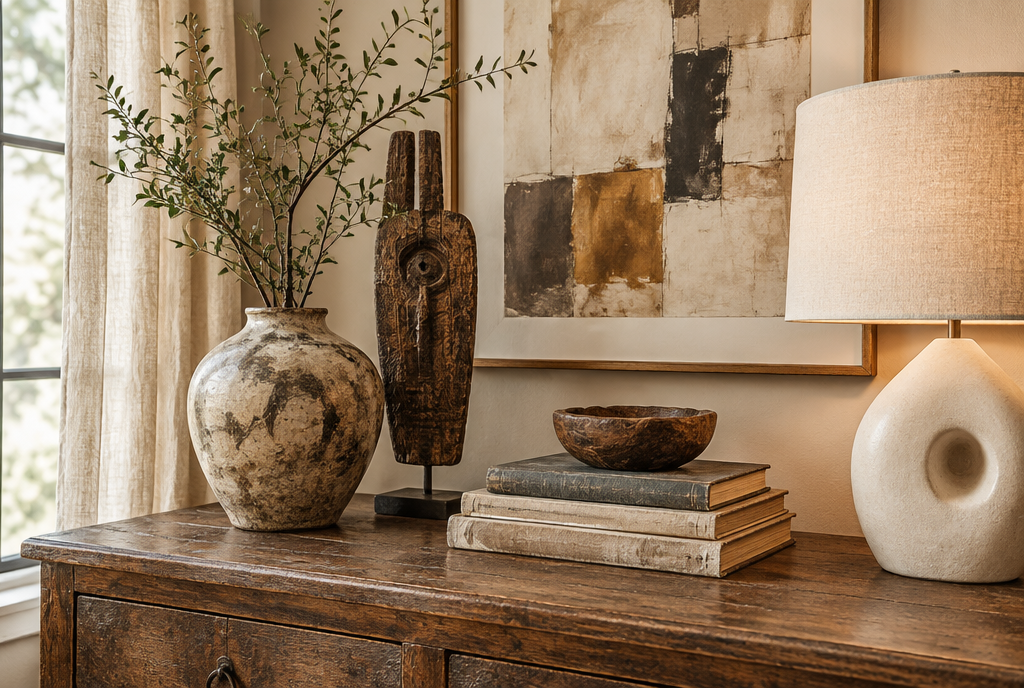
A room that feels personal usually didn’t arrive in one delivery. If you want to add real interest and character, mix newer pieces with things that carry a little history.
And before you shop a store, shop your own home. Look in your other rooms, closets, storage, even the garage for pieces you’ve stopped noticing. An inherited item from a loved one, a vintage vessel, an older book, a handmade or collected piece are the things that give a room of newer furniture some soul.
The secret is editing. Choose pieces that support your room’s palette, function, or story. That older object doesn’t have to match everything around it — it just needs a thoughtful relationship to something else in the space, whether that’s a repeated color, material, shape, or mood.
The Order I’d Fix It In (Save This One)
If you want a simple sequence to work through, here’s the order I’d follow:
Define how the room needs to function.
Name what has to stay and what the room is genuinely missing.
Check the scale and proportion of your main pieces.
Remove the small décor that’s just creating visual noise and dust.
Test a more connected furniture arrangement.
Reintroduce meaningful old and new pieces with intention.
Then and only then… decide if you actually need to buy anything.
This order keeps you from decorating around a problem you could’ve solved by editing or rearranging.
The Bottom Line: Clarity, Not More Stuff
A room that feels off is usually not as far from finished as you think. There’s a good chance you already have most of what you need. The next step is just making the relationships between your pieces clearer. Understand how you want the room to function before shopping. Assessing the proportions before styling. Identifying the connection before filling. And adding in personality before perfection.
RELATED STORIES
WATCH RELATED VIDEO
TRENDING ARTICLES


SHOP THE LOOK
